
|


|
| REVIEWS | PODCASTS | TOP TEN | VIDEO | FEATURES | TOP MOVIES | ABOUT | MERCH |
YOU CAN SEE EVERYTHING (2026)Written by Matthew Pejkovic / 23 November 2026 
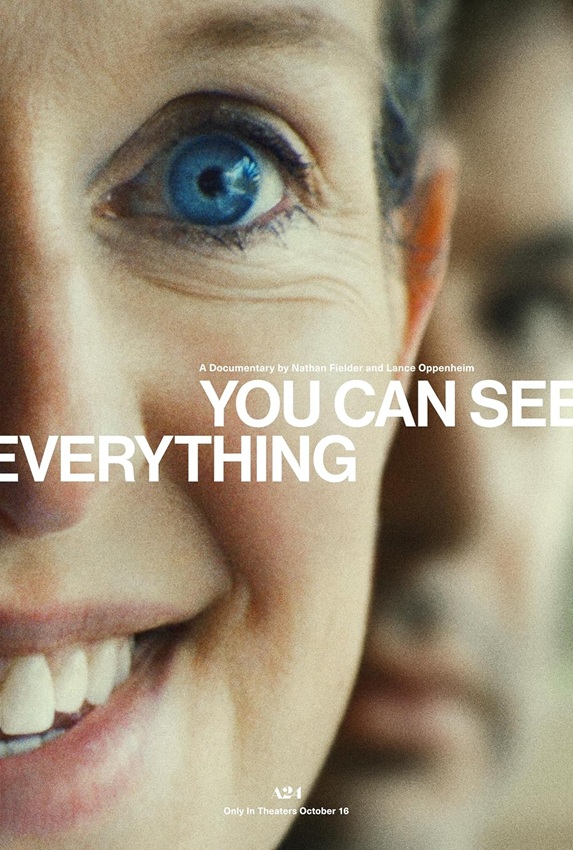
Image Credit © Toho An intimate exploration into the mind and humanity of one of pop culture's great villains, You Can See Everything asks sharp questions about bias, delusion, and exploitation in the pursuit of a truth seen only through the eye of the beholder. Just when you think there is nothing more to be said about Elizabeth Holmes, along comes another chapter in the coverage of the disgraced Theranos founder. You Can See Everything, however, is not your typical workaday documentary. Directed by Nathan Fielder (The Rehearsal) and Lance Oppenheim (Ren Faire), the intimate blends with the meta to create not only an examination of Holmes, but of the industry built around her rise and fall. Beginning 32 days prior to Holmes's 11-year imprisonment for fraud, the setting is a rented beach house in Del Mar, California, where she lives with her partner, Billy Evans, and their young children. Watching like a hawk is Fielder, whose initial scepticism toward Holmes gets complicated when he develops compassion for his subject. Or so we believe. The beauty and frustration of You Can See Everything is that the transparency it - and indeed we - yearn for is often intentionally foggy. Fielder, who moves in with Holmes and her family, constantly steps over the line between documentarian and subject, becoming just as much a part of the story as Holmes herself. This is part of a clear focus on Holmes and the men in her life, with Evans positioned as the film's villain. His tech-bro business mind and love of Charlie Kirk (shock! horror!) result in Fielder and the documentary's more progressive viewers recoiling in disgust, prompting Fielder to assume the role of Holmes's protector. Yet while the filmmakers attempt to present Evans as a manipulative monster - and there are several moments that tip the suspicion metre - their framing accidentally reveals something more complicated: a couple in genuine distress, with Holmes not only facing prison time but drowning in massive legal debt. As the sole breadwinner, Evans tries to monetize Holmes's notoriety through queasy business ventures using her likeness, including a deepfake AI model. Still, his attempt to secure a percentage of the documentary's projected profits lays bare a blunt, hyper-capitalist logic that is hard to entirely dismiss: if the entertainment and media industries are going to profit from their lives, why shouldn't they get a slice of the pie? In a no-doubt purposeful, hypocrisy-drenched creative decision, Fielder and Oppenheim bring in actress Amanda Seyfried- who won an Emmy for playing Holmes in the miniseries The Dropout - first as an observer and then as a participant in dramatic recreations of encounters between Fielder and a now-imprisoned Holmes. The holier-than-thou attitude from Seyfried (who takes on the role of moral barometer) and her decision to once again portray Holmes - even after the fraudster expressed offense at the depiction - proves that when it comes to Hollywood, the lives of others are merely fuel for the entertainment machine.  The inception of You Can See Everything stems from Holmes herself reaching out to studio A24 to make a documentary on her life in a bid to prove her innocence. You Can See Everything most surely does not achieve that, as the filmmakers are far less interested in relitigating her past crimes than chronicling this once-titan of industry preparing herself for 11 years in the slammer. What it does achieve is showing how the power of self-delusion is contagious. Holmes's penchant for deception and emotional manipulation is well documented, and in the case of Fielder - and many watching this documentary - her powers are still strong.
RELATED CONTENT
|



|
Created and Edited by Matthew Pejkovic / Contact:
mattsm@mattsmoviereviews.net Logo created by Colony Graphic Design / Copyright © Matthew Pejkovic |