Second round of the Mortal Kombat cinematic reboot is a much stronger showing thanks to director Simon McQuiod’s focus on franchise strengths and Karl Urban’s scene-stealing performance.
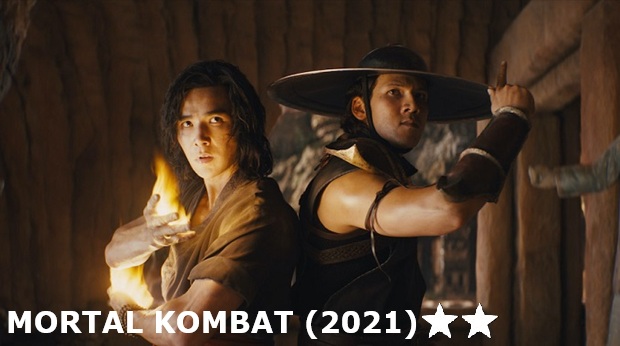
There is nothing worse than when a filmmaker overplays their hand when adapting a beloved property, which is exactly what Simon McQuoid did with the 2021 cinematic reboot of the videogame franchise Mortal Kombat by introducing new characters and short-changing the core elements of why Mortal Kombat is such a beloved videogame property.
Mortal Kombat II then is as much a re-focus as it is a sequel, resulting in a vast improvement of an action film albeit one still with several glaring flaws, yet these are the breaks when it comes to videogame movies.
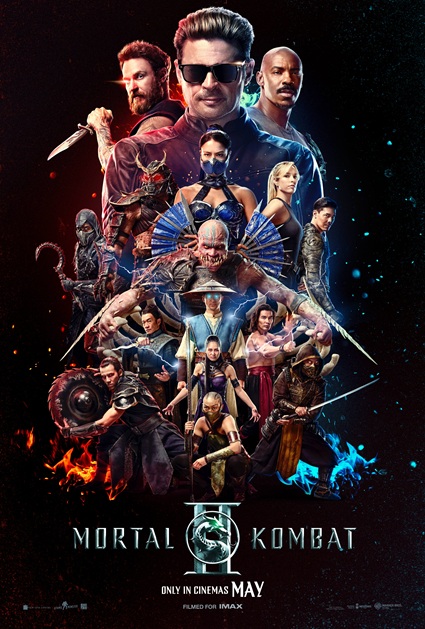
Mortal Kombat II begins with the emperor of Outworld, Shao Kahn (Martyn Ford), winning a Mortal Kombat tournament against the realm of Edenia and adopting young princess Kitana (Sophia Xu) as his own.
Years later Khan – with an adult Kitana (Adeline Rudolph) as his best fighter – sets his sights on the realm of Earth. This leads to Earth-realm protector - the thunder god Lord Raiden (Ludi Lin) - to recruit martial arts champion and former action star Johnny Cage (Karl Urban) to john his team of Earth-realm warriors - Sonya Blade (Jessica McNamee), Liu Kang (Ludi Lin), Cole Young (Lewis Tan), and Jax Briggs (Mehcad Brooks) – to save Earth from annihilation.
Of course there is more to the story with screenwriter Jeremy Slater (Godzilla X Kong: The New Empire) having his main characters of Kitana and Cage deal with themes of legacy and self-worth (respectively), yet Mortal Kombat has always been about the fantastically violent fights and the superpowers featured therein, and McQuoid mostly delivers on this front.
Yes, there are more tournament fights, and yes McQuoid lets the blood run free with much slicing, dicing, bone-breaking and head-crushing. Mortal Kombat II, however, suffers from a case of weightlessness when it comes to its fight sequences and the CGI world-building that accompanies them, with McQuoid not quite able to present a tangible world for the audience to invest in. If there was ever a case for more practical-driven filmmaking in a movie, Mortal Kombat II would be it.
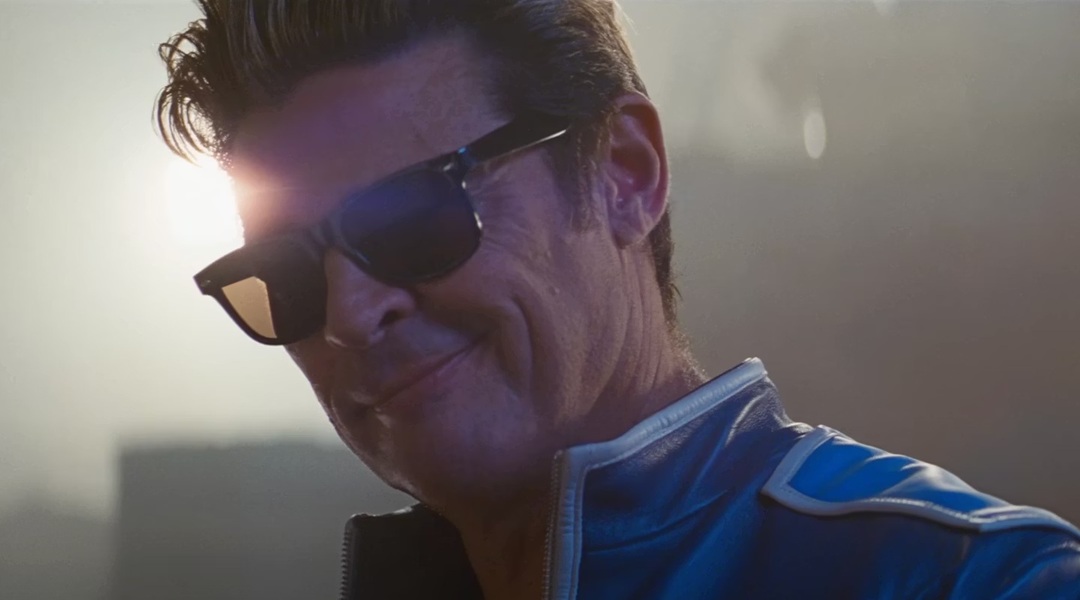
Thankfully a hero arrives int the form of Karl Urban as a perfectly cast Johnny Cage, the has-been action star who (reluctantly) takes on the role of a lifetime as one of Earth’s saviours. Urban provides a much-needed personality shot in a film filled with interesting characters portrayed with little charisma, once again exemplifying his promise as a movie-star leading man able to lead his own franchise.
Also entertaining is Australian actor Josh Lawson as the foul-mouthed mercenary Kano, although some of his humour might go over the heads of those not accustomed to Australian slang.
When viewed purely through the goal of improving upon its predecessor, Mortal Kombat II accomplishes its mission. There is still potential, however, for McQuoid and his team to take this franchise to a higher level through more grounded filmmaking techniques. Afterall, an old-school videogame deserves to be adapted with old-school filmmaking.